


iPMI Global Speaks with Neil Kirby, CEO, Global Individual Health, Cigna International
- Written by: iPMI Global
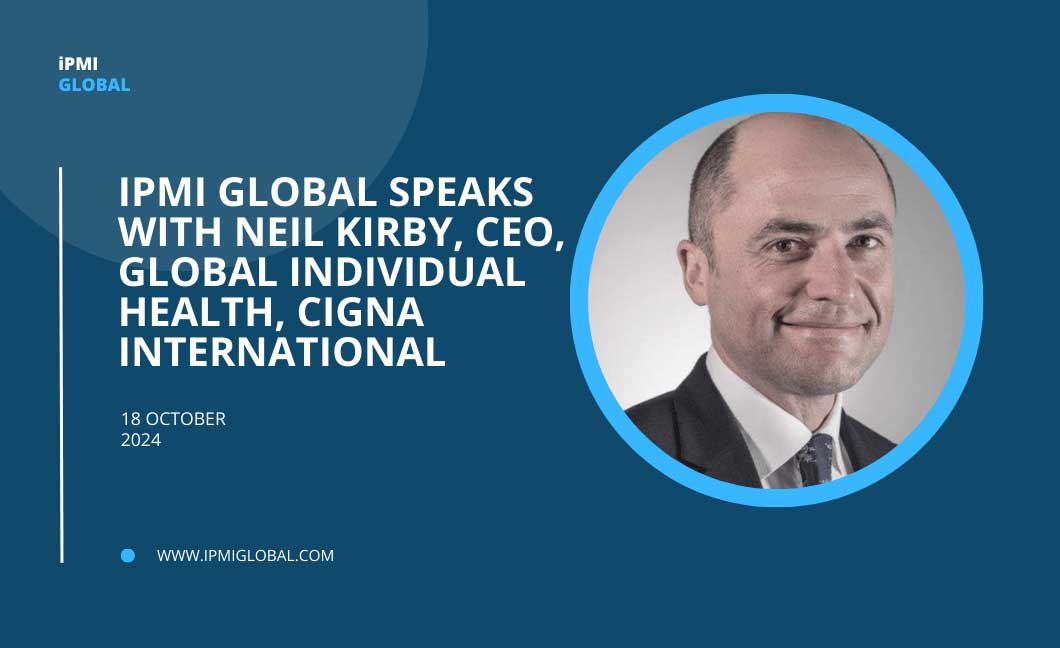
In this exclusive iPMI Global interview, Christopher Knight, CEO, iPMI Global, met with Neil Kirby, CEO of Global Individual Health at Cigna International. Kirby discusses the growth of the international private medical insurance (iPMI) market, the challenges facing both insurers and consumers, and the role of Cigna International in providing solutions. He highlights the importance of understanding customer needs, delivering a frictionless service model, and educating customers on preventative healthcare options. Kirby also emphasizes the need for collaboration between insurers and providers to combat rising healthcare costs and keep broker networks up to date with evolving regulations. He concludes by expressing optimism about the future of the iPMI market, emphasizing Cigna International's commitment to delivering the best outcomes for its customers.
Please introduce yourself and background in the international private medical insurance market:
My name is Neil Kirby, and I joined Cigna Healthcare International Health on July 1st this year to lead the Global Individual Health (GIH) business. I have more than 25 years of global commercial leadership experience including more than eight years at Bupa Global as Global Marketing and Sales Director.
You were appointed CEO of Global Individual Health, Cigna International in July 2024. What is the plan to grow the iPMI business moving forward?
The creation of this role highlights the importance of the global individual health segment for Cigna and its commitment to it. The individual segment continues to grow and provide opportunities for insurers and brokers. However, to realise the full potential of the segment it's important we understand specific customer segment needs that exist and tailor propositions accordingly. This, underpinned by a core focus on delivering a solid and consistent service model, we believe will be the growth recipe for us and our vital intermediary partners.
The globally mobile demographic is crucial for many providers of international private medical insurance. How can global iPMI providers better serve this sector?
The best way to serve customers has never changed in the sector: it is about always trying to deliver a frictionless service model which is built around empathy and customer understanding. A customer lens must be something which we continually look through when engaging with customers. Digital is becoming a greater component in serving the segment, but will never replace speaking to a service agent, when the need arises.
Greater engagement and alignment between providers, intermediaries and insurers will benefit customers and grow the sector, which is what we all want.
Late 2023 and Cigna Healthcare launched a digital hub for expats, Inside Expat Health. How important a role do insurers play when it comes to educating expatriates about preventative healthcare options?
At Cigna Healthcare, we are committed to creating a better future built on the vitality of each individual and every community. This means going beyond providing insurance for curative medicine and treatments and doing our part in educating customers on preventative health and benefits of a healthy lifestyle.
I believe insurers should and can play a huge role in this for the mutual benefit of the customer and company. A preventative approach to healthcare reduces risk of serious health conditions including many chronic diseases, reducing the need for complicated and costly medical treatment in the long run. For example, Musculoskeletal (MSK) conditions affect over 1.7 billion people globally and are the leading cause of disability in many countries. They are one of the highest claims areas for insurers like Cigna Healthcare. We are raising awareness about this issue, educating customers about things they can do to manage MSK conditions before they deteriorate and encouraging them to lead an active lifestyle.
High costs of iPMI premiums are a cause of concern for employers and individuals globally. Some would say medical inflation is the number 1 risk. How can the international private medical insurance market combat higher global costs of healthcare?
Global medical inflation, driven by general increase in cost and rising demand, is impacting affordability of health services and health insurance for consumers. Simply passing medical inflation directly onto the consumer will not be tolerated by them, to the extent that it had in the past, and neither should it be. As insurers, it is our responsibility to support consumers achieve the best commercial and clinical outcomes for them. Insurers and providers need to work together to create a sustainable market which fosters growth and provides commercial accessibility to a wider range of consumers.
Whilst the size of the iPMI insurer’s direct settlement network has always been used as a marker of its global reach, the consumer iPMI segment reside in relatively small geographic areas. It’s within these areas that insurers need to work closely with providers to negotiate better deals for customers, investing in data analytics to offer insights to identify high-cost areas, as well as streamlining the claims process to make it more cost-effective for customers in the long term.
We pride ourselves on being a trusted partner on our customers’ care journey and are there to offer support and guidance when they need it the most. Under our Case Management program, nurse case managers help patients with complex medical cases to navigate the healthcare system, helping them coordinate the services and medication required to make sure they get the most suitable care and avoiding any unnecessary treatment. Not only does this improve our customers’ health outcomes, but also lowers costs for patients and the industry, through more efficient and effective use of healthcare resources.
In such a nomadic market, where rules and regulations can change overnight, how does Cigna International, keep global broker networks up to date?
Cigna Healthcare has an extensive international network of over 175 legal, compliance and privacy experts and 12 global service centres that provide on-the-ground healthcare support and solutions to country-specific compliance frameworks. It’s always been important that we have our regulatory radar switched on to ensure we keep up to date with changes and anticipate them.
We regularly engage with our broker network globally through both one-on-one relationships and our advisory council, where we share our latest insights on industry trends, regulations and practices, and work together with them.
Cigna has more than 60 years of experience in designing, implementing and managing international group health insurance and employee benefits programs for domestic and internationally recruited employees from global corporations, international organisations (IGO & NGO) and governments. Cigna also provides health services for globally mobile individuals. How has the international private medical insurance market changed in recent years?
In recent years, we’ve seen multiple economic and health trends combining to drive an increasing demand for international private medical insurance. According to the Cigna Healthcare International Health Study 2024, 16% of the global population has what we describe as high vitality. These people report more autonomy and competence across all health dimensions and rate their overall health higher than other respondents (including physical and emotional wellbeing), underscoring the multi-dimensional character of health.
A greater focus on both physical and mental health by consumers means that people are taking charge of their health and well-being more proactively, and having a private medical insurance plan in place is one way people are safeguarding and improving their health. Over time, this demand will be intensified by the challenges of an aging global population and all that brings with it - more incidences of chronic diseases and higher health demands. This growth in demand is further driven by a growing middle class with greater disposable income to spend on healthcare.
Technological advances, combined with healthcare innovation and customer personalization preferences, are creating incredible opportunities for those in the market willing to embrace change. Cigna Healthcare has been a pioneer in the virtual health space, championing its telehealth service even before the global pandemic. Such platforms are particularly valuable for our globally mobile customers, as they offer accessible medical service wherever they find themselves in the world, even allowing them to follow up with the same healthcare practitioner who is familiar with the patient’s condition.
What would be your top three tips for a first-time expatriate?
For first-time expatriates, the most important tip I can share is to prepare thoroughly before your move. Preparation lays the groundwork for a successful expatriation, and conducting extensive research, including about healthcare options, and getting necessary documents in order will help to ease your transition.
Next, I would encourage expats to embrace the local culture with an open mind. Adjusting to a new culture is a pivotal aspect of working overseas, and engaging actively with your new community will enhance your expat experience beyond the workplace.
Finally, maintaining physical and mental well-being is key. Navigating the healthcare system in a new country can be daunting, and the level of healthcare provision offered may not be to the standard of your home country; therefore, the importance of comprehensive health insurance cannot be overstated. Our role as an insurer is not to just be there to pay claims but also to support customers navigate local healthcare systems – this is something which we will start to further evolve in 2025.
When it comes to international private medical insurance, in the next 12 months what can we expect to see from Cigna International?
We will see increasing competition in the market as larger multi line insurers take a bigger interest in Health Insurance and its International component. This will be beneficial for the market overall and provide more attractive choices for consumers.
At the same time, the historical notion that the best outcomes for brokers and consumers will be delivered with global products and wide geographic pricing will start to diminish. We will see the needs of certain segments become more prevalent such as Digital Nomads and Seniors. This is a trend that Cigna International already started focusing on with the launch of its Seniors product in 2023.
iPMI is a special (and complicated!) place in the boarder health insurance landscape, and I know that the people who work within it are passionate about it, none more so than Cigna Global.
In terms of what you can expect to see in the next 12 months, that’s simple - an unwavering focus on delivering the best outcomes for customers and our people.


